I'm a Talentless Artist and I Forgot My Sunscreen
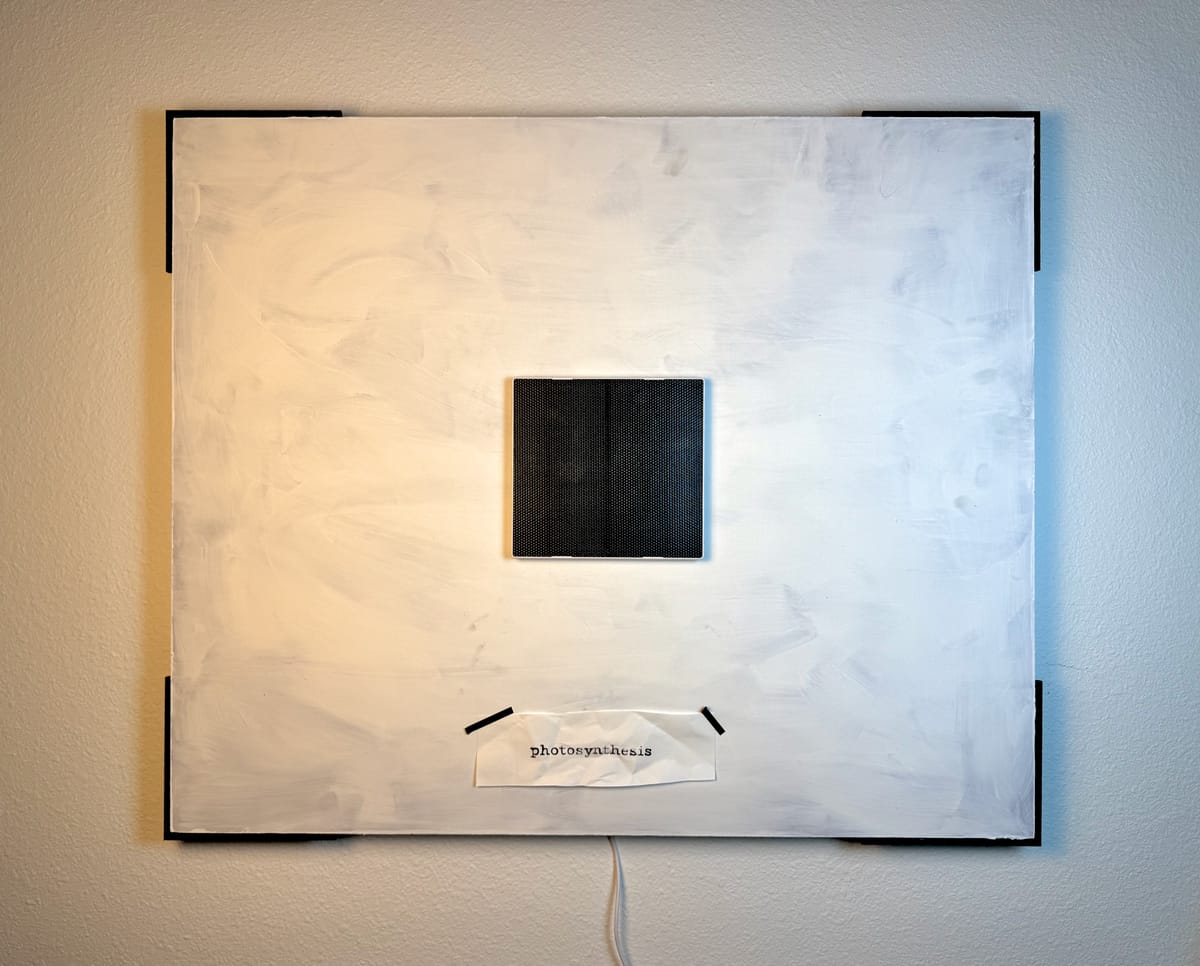
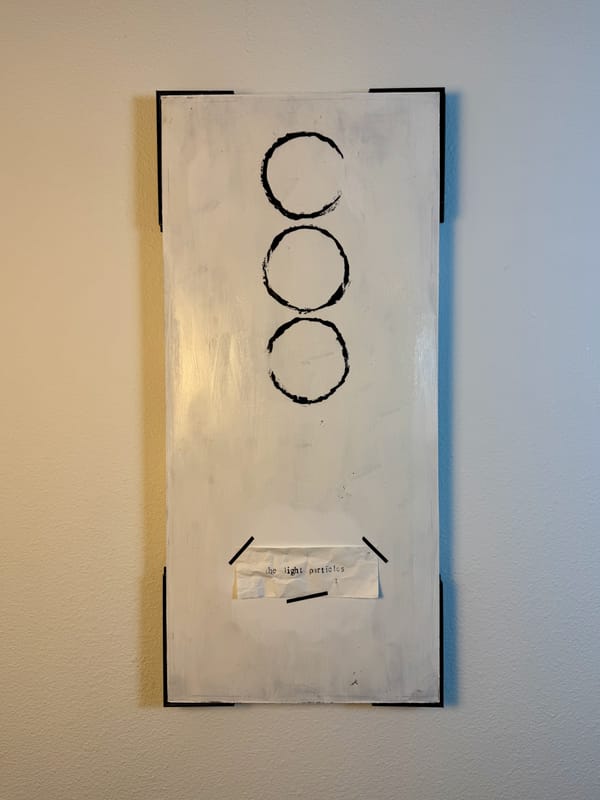
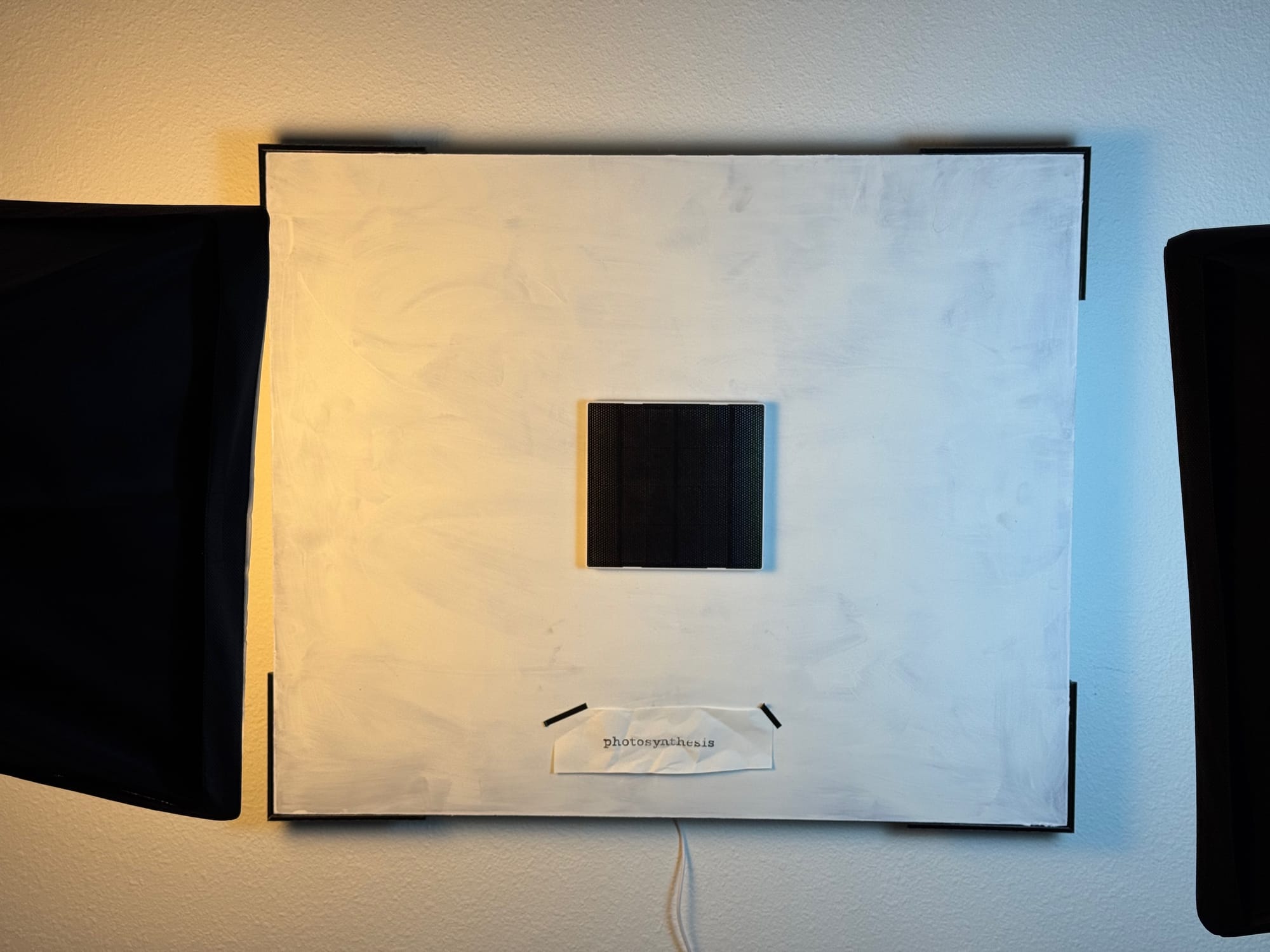
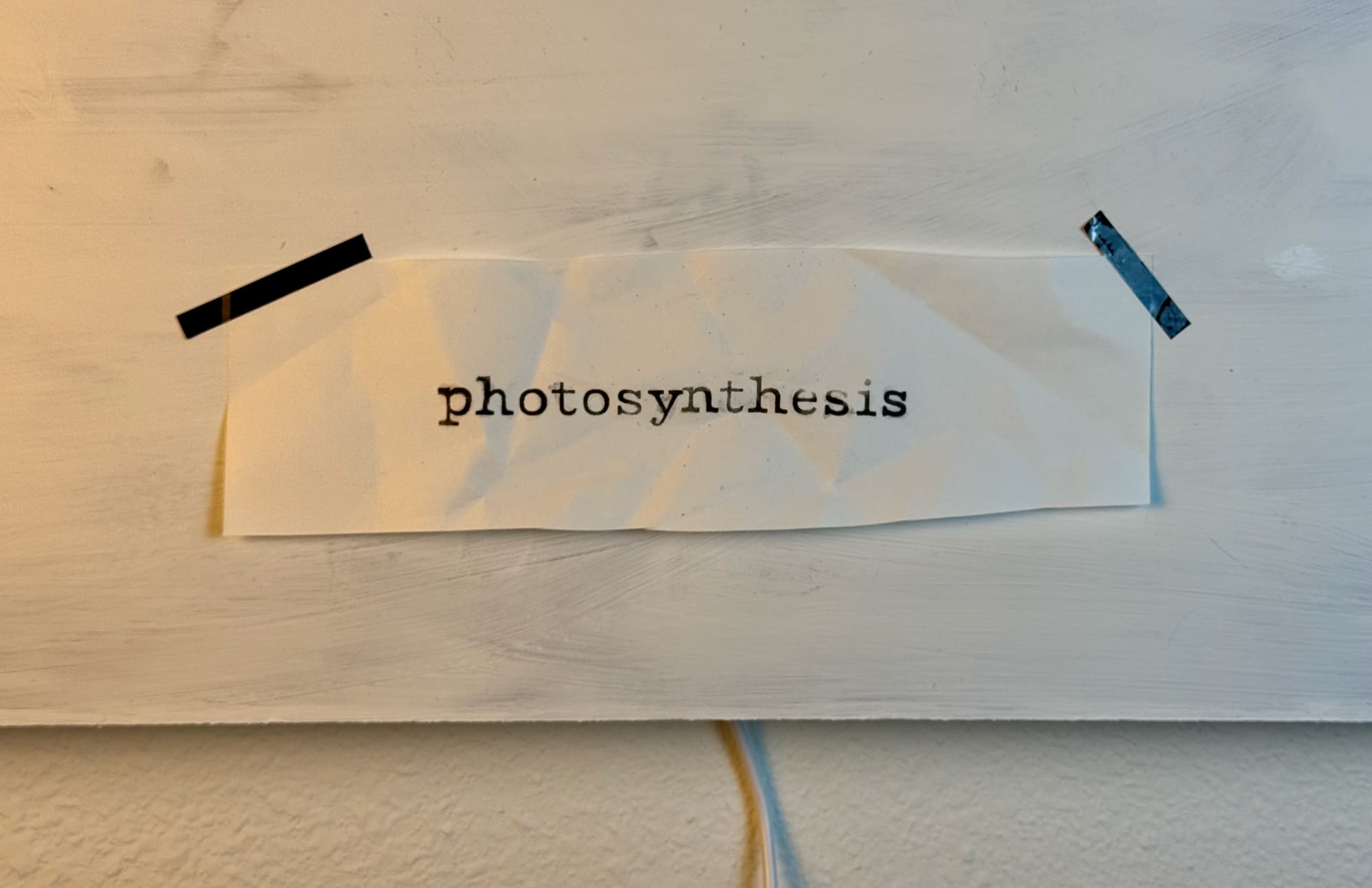
I Forgot My Sunscreen | Piece 2/27
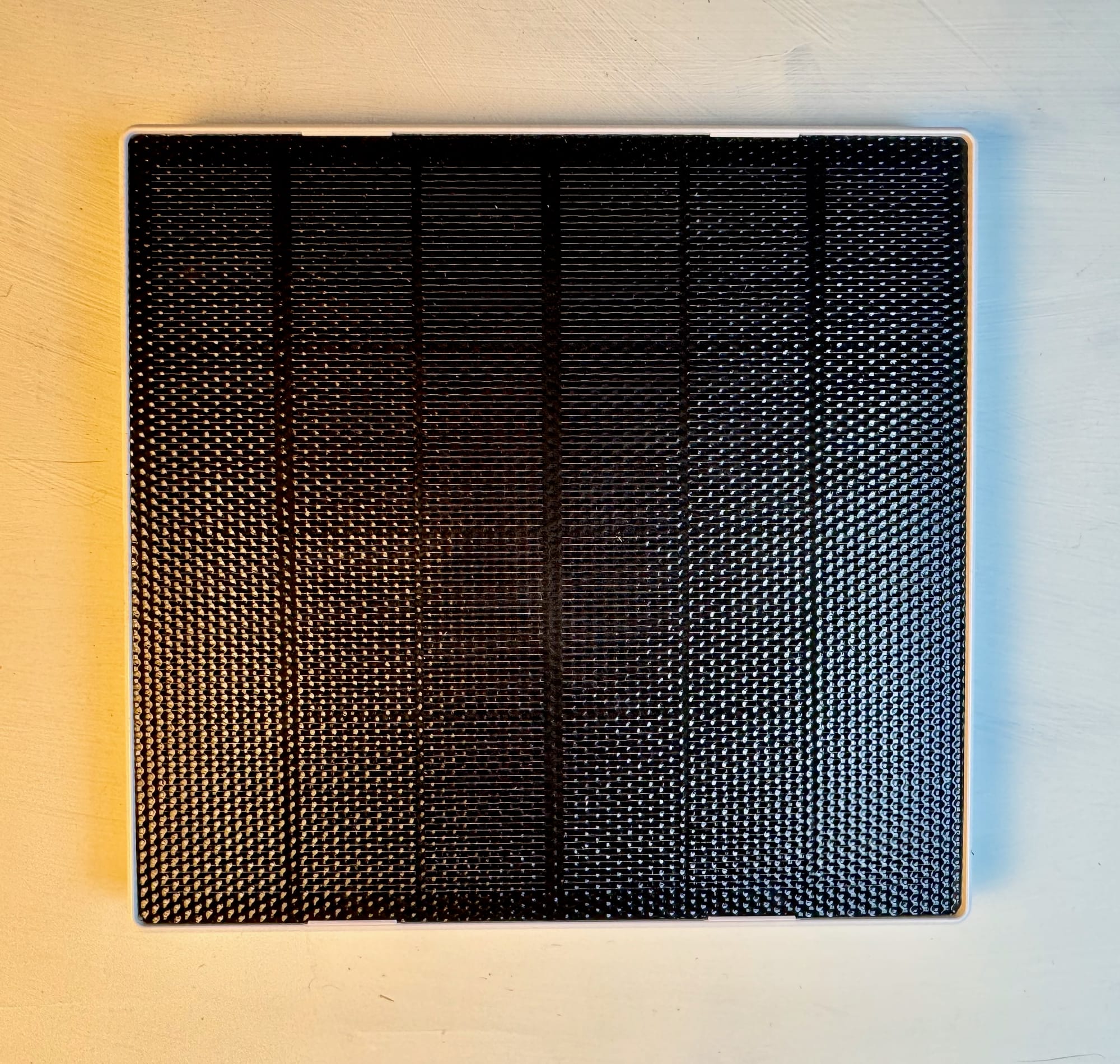
solar panel, mixed media
Hey Y’all,
This post is about the second completed piece in my TECH KNOW ZEN series. It’s part of the chapter titled Nature (Act One).
Today’s meditation will be on my status as a talentless artist.
I have no skills as a painter. I don’t know how colors mix and I certainly can’t use them to recreate a beautiful landscape. I can’t sculpt, draw, or etch either. I’ve never learned an instrument. I have rudimentary practice at best with photography. Woodworking is a mystery to me. I can’t bend, weld, or shape metal with any degree of talent. Using the pen tool on illustrator confounds me. I’ve never been formally trained in any way whatsoever when it comes to making art. So why do I do it?
To answer that, let’s take a step back. Over the last 4 years or so I’ve developed a skill that’s quite different than the ones I listed. It doesn’t require a brush, a pen, or a hammer. It can’t be easily taught because it can’t be replicated. You won’t even be able to point to where I use it in my work. I’m talking about a love for the creative process itself.
The creative process is a dance with three partners: You, the work, and the idea. First, the idea comes to you. This requires fine inner tuning to be able to recognize when the right one lands on your shoulder. Colloquially we call this taste. From there, you begin the work to bring the idea into reality. The work is the communication between you and the idea. This requires a great deal of trust, patience, and the ability to listen as the idea speaks to you along the way. The idea is trusting you to bring it to reality, and so you also need to be able to guide it as much as it guides you. It’s a back and forth. Knowing how to stay in this communication is called, colloquially… good taste.
Over the past 4 years, instead of learning traditional skills, I was (unintentionally) strengthening the muscles necessary for taking part in the dance that is the creative process. I started 3 companies and although I never made any money, I did get better at going from idea to creation. I learned how to do whatever it takes to bring the idea to life. I learned how to sit down and do the work instead of procrastinating. I learned that the only barometer for success is how much you enjoyed the journey and if you are satisfied with how far you took it. The entrepreneurial process is alike in many ways to making art.
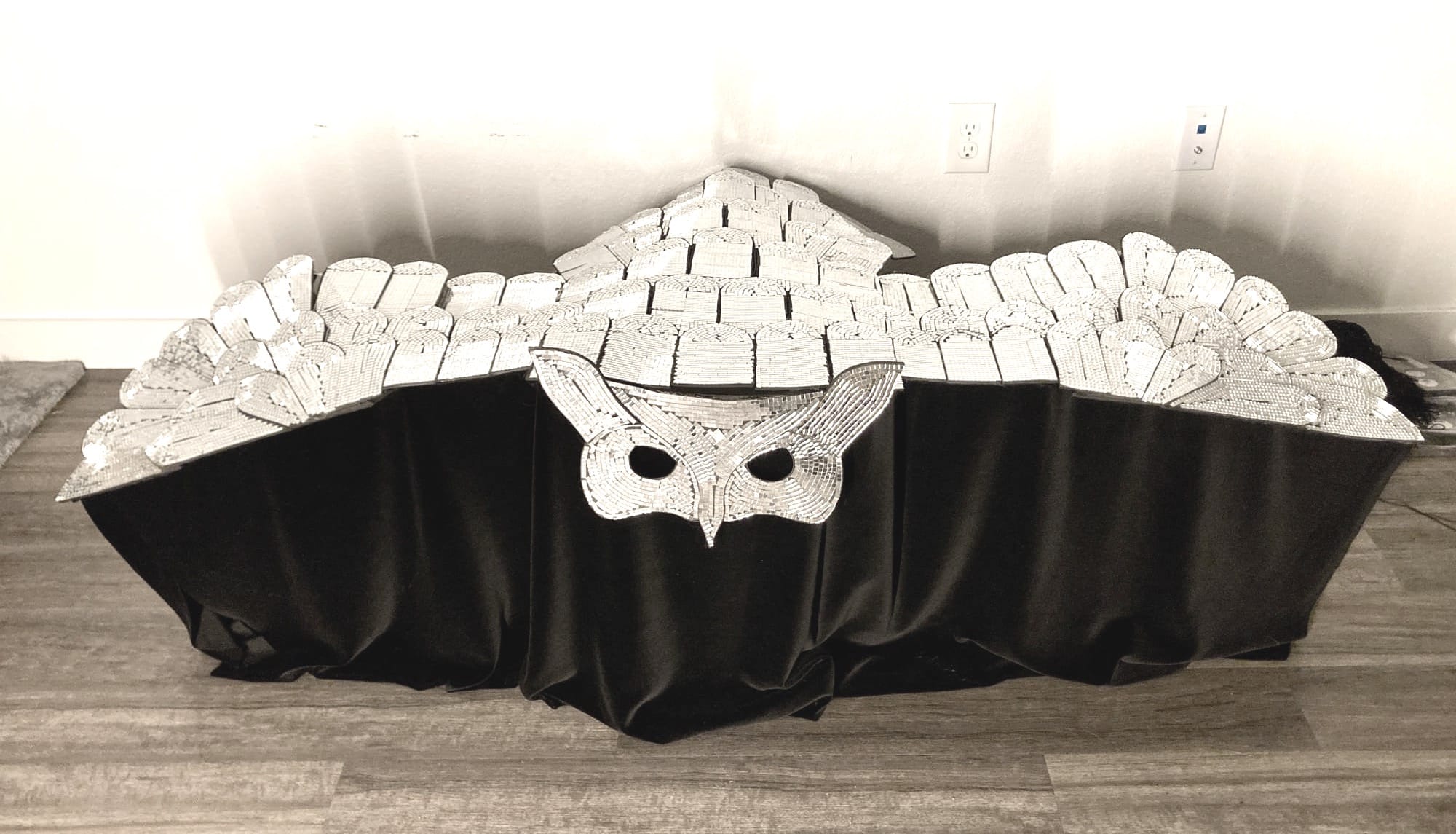
Besides just starting companies, I also made some art. A giant rose with LED lights. A 3D owl sculpture from thousands of tiny mirrors. The Bhagavad Gita wrapped in pure black velvet that could wirelessly transfer the text to your phone. Over and over I would hear an idea land next to me, and I would honor it by accepting the invitation to dance. Each time, I left with new skills and a cool story, but more importantly, I walked away with what became the real reward of creating: a better understanding of who I was. Like diary entries, the work allowed me to express myself, and when I stood back to look at it, I could see a part of who I was from a different perspective. The medium didn’t matter and the skill barrier was never a hurdle. I just figured it out the best I could. These art pieces weren’t anything like what I’m doing now, but looking back, it was always leading to this.
This love for the creative process began to develop a certain style in my work that became more focused with each piece. Style comes from taste. From how you push the piece as you watch it evolve in front of you. No one taste is inherently better than any other taste, what matters is how focused you can keep it along the journey. Good art is the result of having every little decision align with the same judgement throughout the creative process. Taste, judgement, style - these all develop from the same thing: your perspective. This is why some pieces are cohesive - they are made from one singular perspective. That one perspective could even be an amalgamation of multiple individual perspectives, like cubism. As long as it’s done consistently it becomes its own unique perspective.
My art isn’t limited by my lack of talent, but shaped by it. In fact, I find it actually broadens me to more ways of expression. If I was a great painter, then I’d be conceptually limited to just paint. But I’m not. So if I want to spend more time on building the frame than the piece itself, that’s perfectly okay. And if I want to custom make stamps, that’s allowed too. If I had spent years perfecting my painting skills these decisions would probably seem a little asinine.
“The best art is artless.” - Lao-tzu
I think good art is simple. How often have I thrown away a dust jacket in favor of the beautifully simple book cover underneath? Keeping it simple though, that’s the hard part. It requires focus. The intention of my art is not to amaze the viewer with technical skills, but act like a sharpened blade inserting the intended idea directly into the mind.

So to answer the question that started this, why do I do it? Because I have something I need to say, and this is the only way I know how.
So yes, I’m a talentless artist. But I didn’t choose to be an artist. I chose the path of an engineer. Art was forced upon me nonetheless, and now I’ve begun to finally understand the style of my art.
Colloquially, let’s call it cerebral techart.
with gratitude,
John Fitzpatrick
P.S. Here's that owl I was talking about earlier: