Why is it So Hard to Find The Rite Words?
[this article is a continuation from last week, found here]
An engineer and an artist walk into a bar. The bartender says "Hi John." I find a booth in the back, take out my journal, and pick up where I left off last time:
Ok - so far I've established that the scientific method requires intuition in the hypothesis stage and measurable results in the experimental phase. This iterative cycle is useful for an engineer in pursuit of control. But if we break it down to its parts, we can see it's the same steps as my creative process:
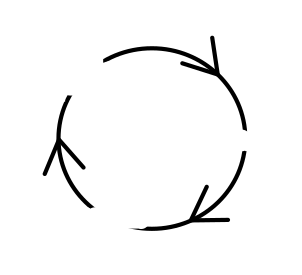
My artistic side and engineering side might use different words, like calling it an "idea" instead of "hypothesis", but it's the same thing. The difference is where and how I use my intuition. My engineer side just uses it to come up with the hypothesis. My creative side uses it to come up with the hypothesis and to measure the test results. These are actually two different kinds of intuition, which I'll define more clearly in this diatribe.
First, I want to go over my creative process using the example of how to display text. Words are hard. Finding the rite words is even harder.¹ Using words in art feels like trying to throw a frisbee into the little slit in the game of kan jam. Sure, it's easier to go for the top hole but hitting that little slit feels so much better.² But you gotta nail it.
I think this may be why most visual artists try to avoid using words in their art. But I like words. I like poetry. I like the challenge of trying to capture a fluttering idea within the net of language. And if picking the right word was hard enough, how do I know when they look right? Like what font do I use, what color, how big, etc. Personally, I run experiments to gather data and use that data to refine the look of the words. The experiment is a prototype, and the data is how that prototype makes me feel.
My first idea was to print them, the hypothesis being that art about technology should use modern technology in the making of it.
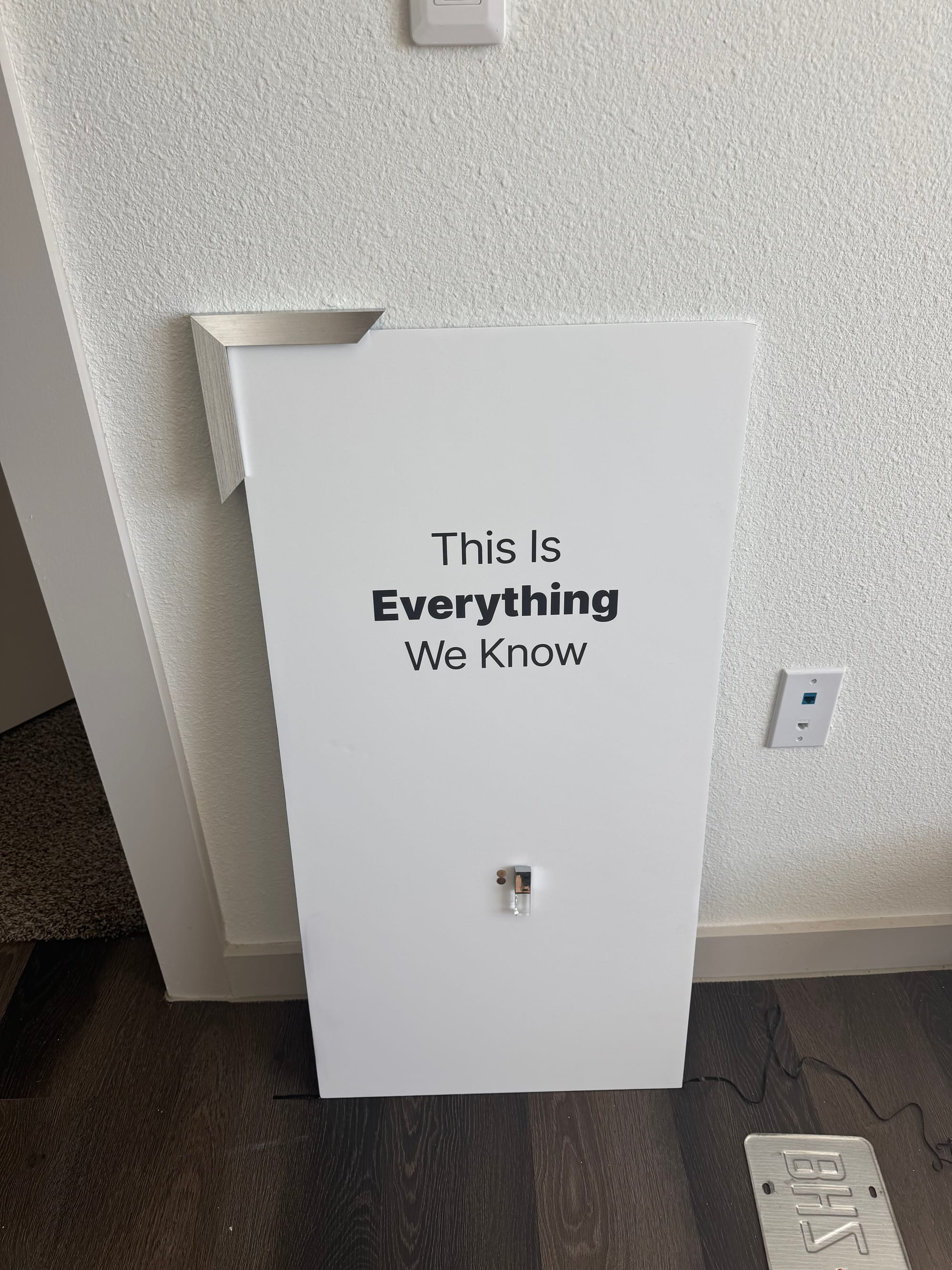
My hypothesis was wrong: printing was too technologically driven and it needed more humanity. So next up I tried writing it by hand.
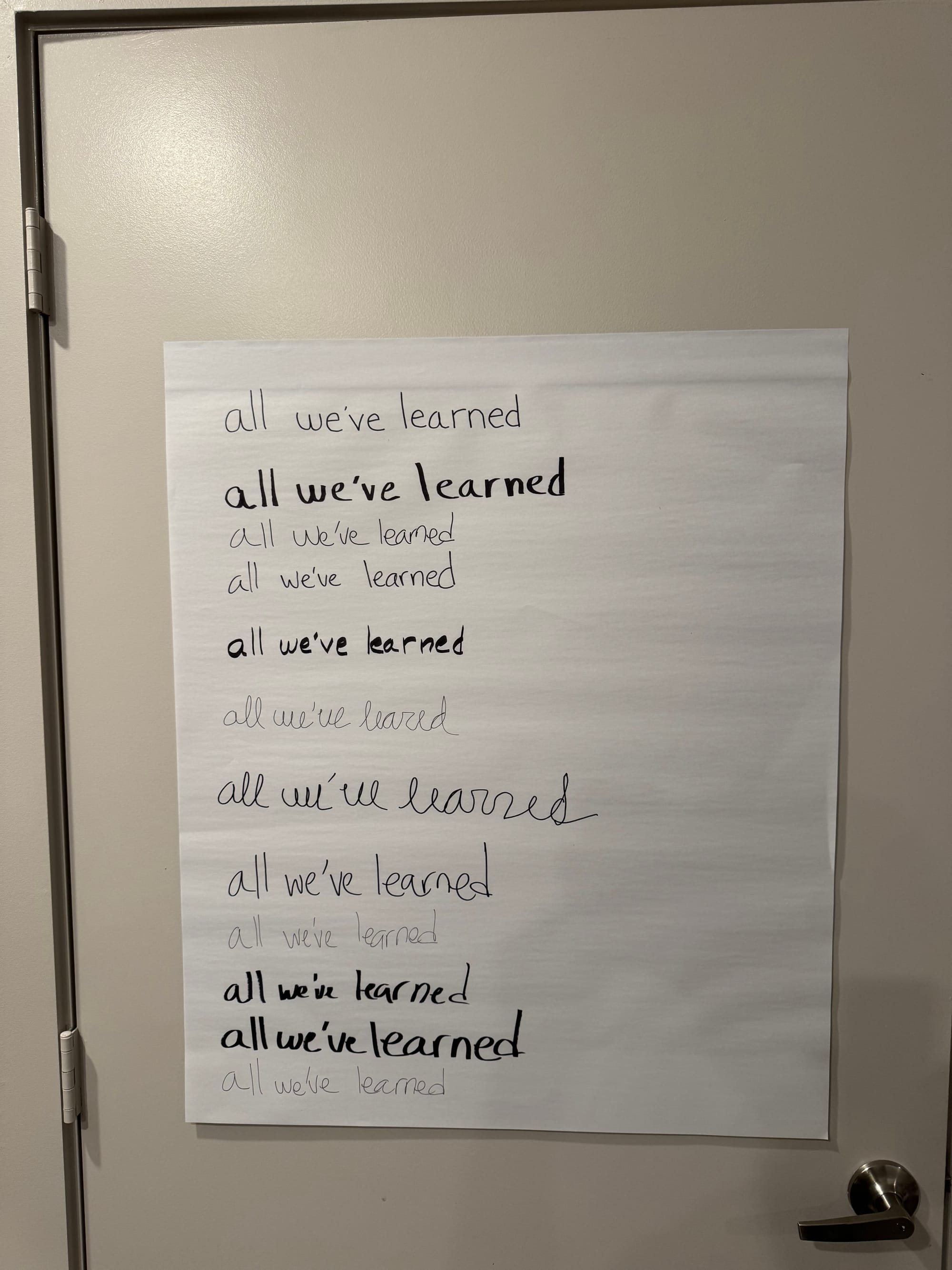
I tried dozens of different writing instruments and styles. Didn't matter - I didn't like any of them.³ Back to my hypothesis. Printing was too mechanical, handwriting was too human. The emotional style I'm actually trying to go for sits in between those two....
Typewriters! Typewriters have that touch of machined lettering but aren't quite fully digital either. My new hypothesis was that a typewriter effect will be the perfect blend of tech and humanity. In pursuit of this effect, I started making custom stamps to get the right lettering.
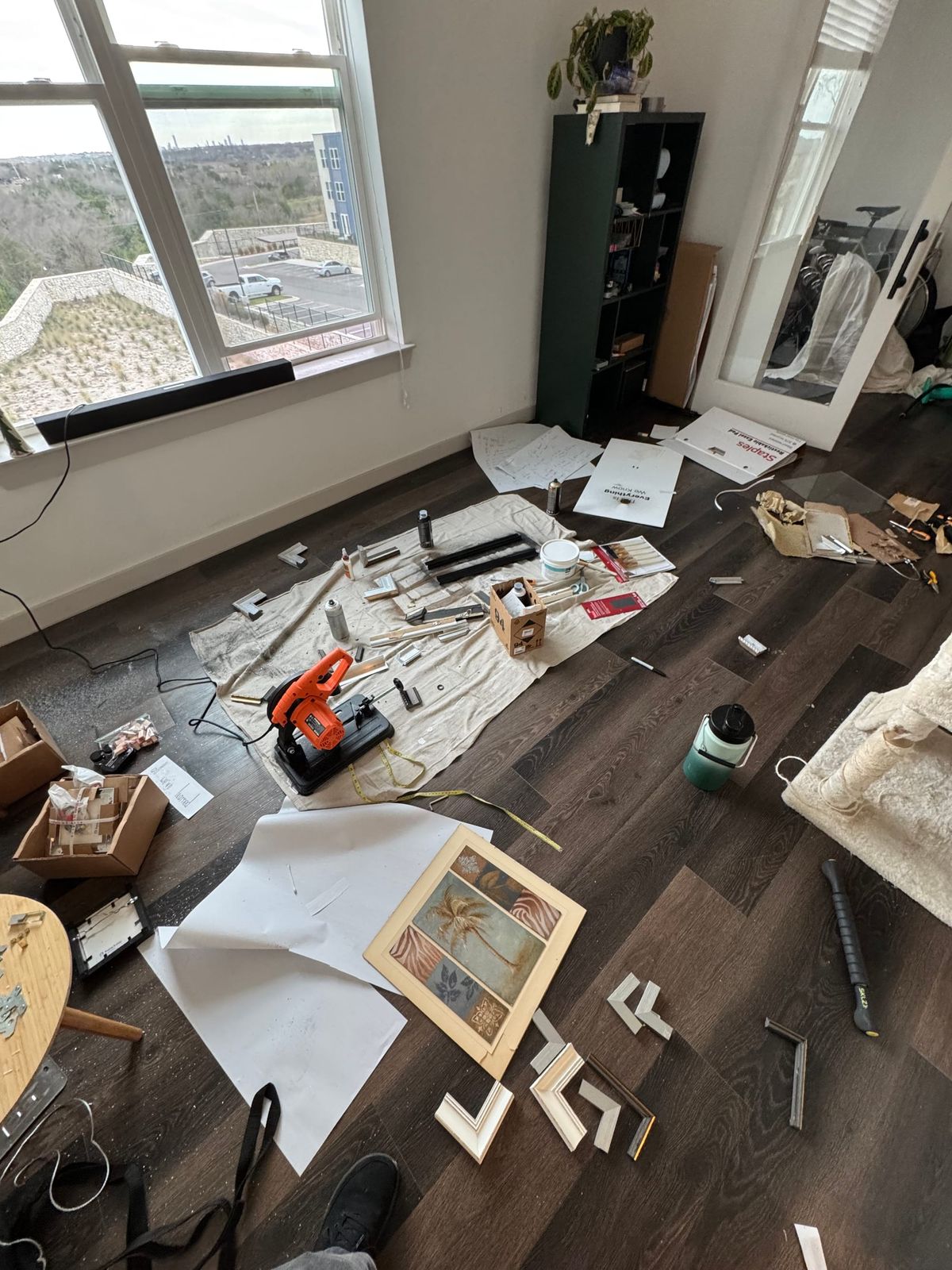
How the sausage is made baby
In the end, I didn't quite like how it looked when put directly on the board. I knew it was the right direction, but after seeing it placed directly on the board, it just didn't feel right. I couldn't explain why yet, it was just a knowing.
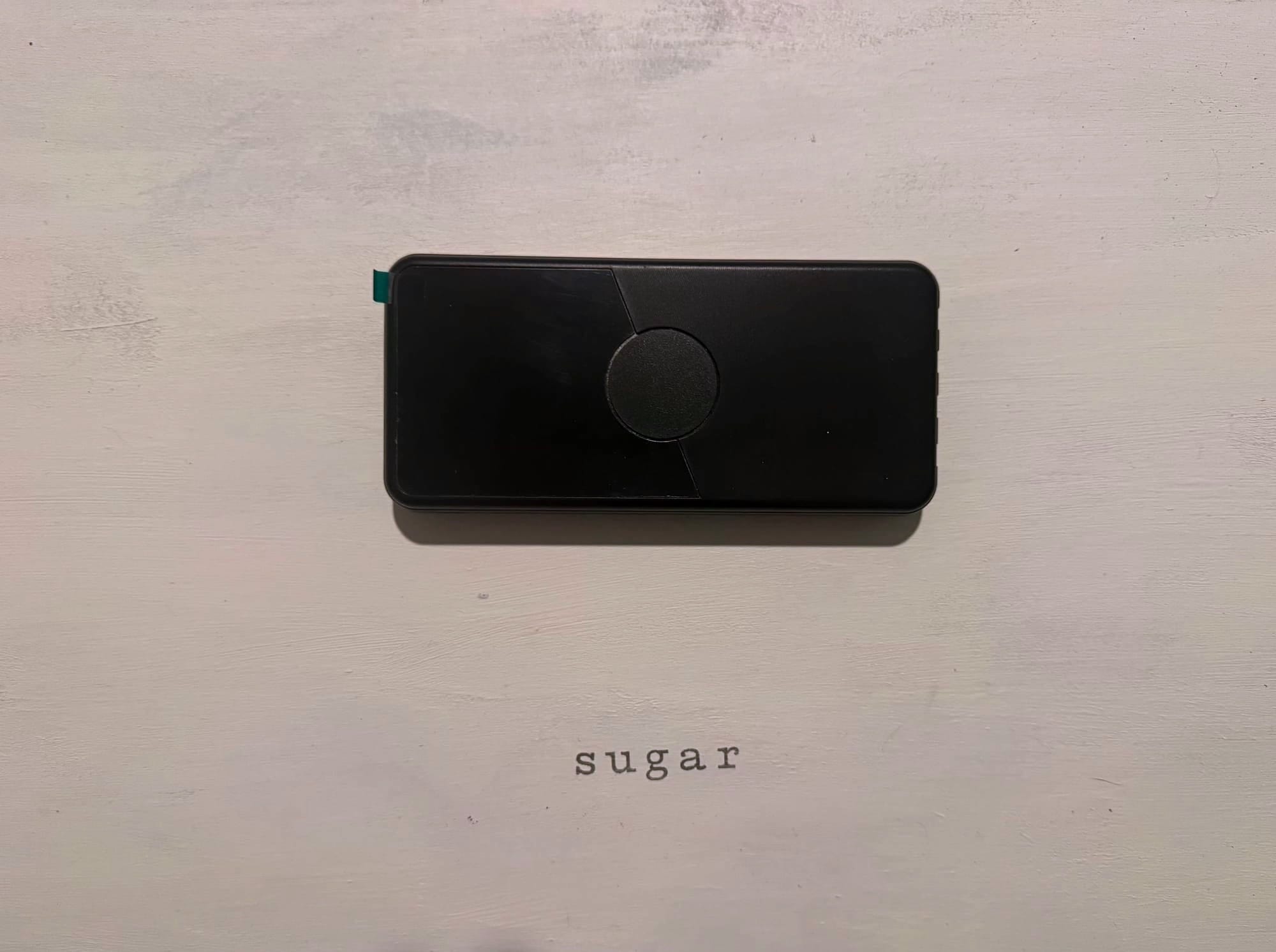
I kept experimenting but ran out of ideas. I suppose it was a bit of a creative block. That's when I decided to go with the paper, not because I loved it, but because I felt it was good enough to finish the piece and keep my momentum, while also being something that would be easy to replace later on.
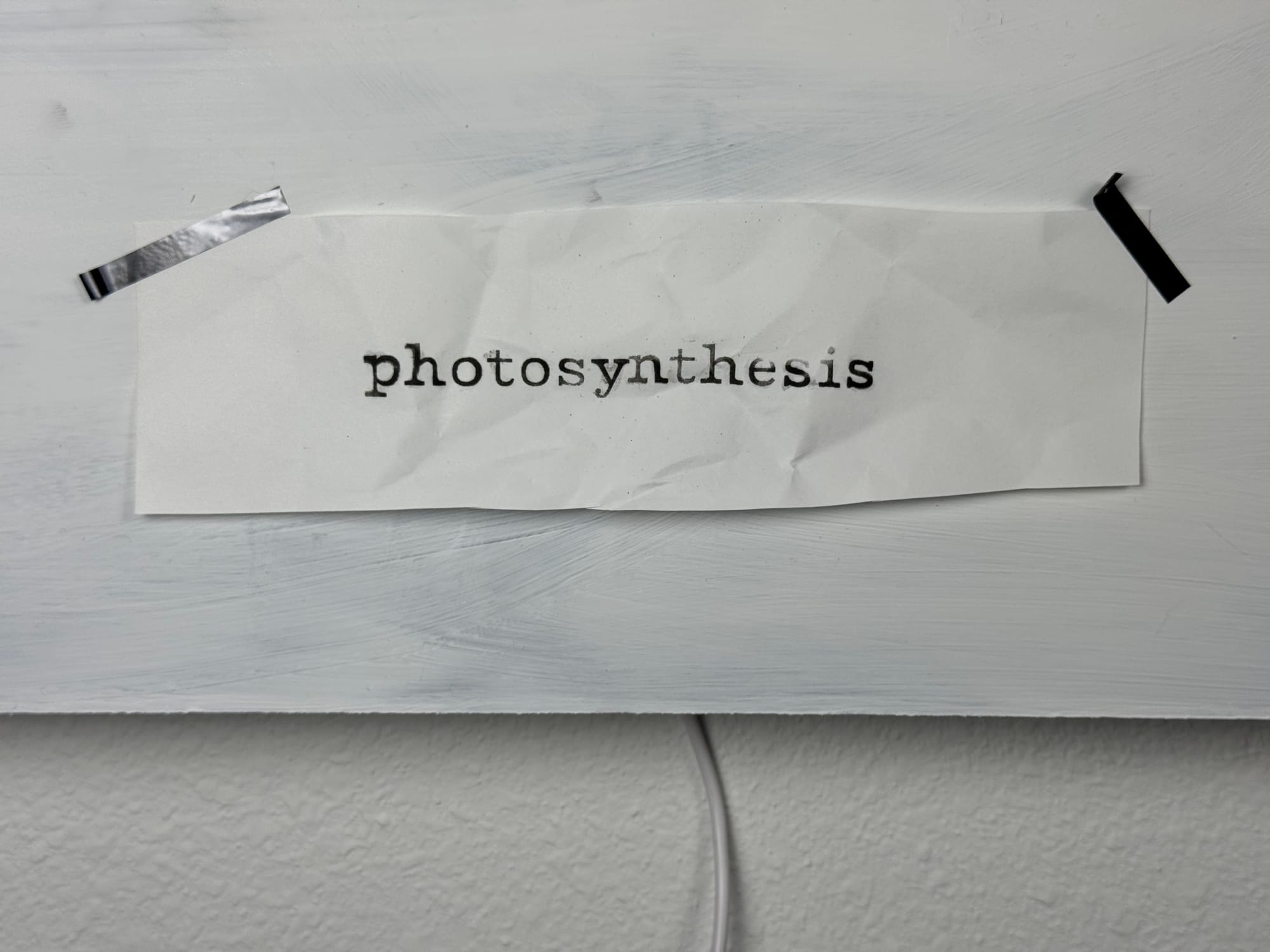
Ignore the changing words in the examples as these all come from different pieces including some unreleased. But the point is clear: the style of the words is evolving through this process. The reason this third piece has taken me so long is because I'm back to revisiting the text and have made some more breakthroughs. No spoilers but I'll give you a hint: it involves glass.
I don't know what the "right" way to display the text is. I just have an abstract concept of what emotion the artwork needs to communicate, which allows me to create ideas of what might work. I then test the ideas by making prototypes and using my emotional reaction to the prototype to determine if I'm moving in the right direction or not. I can repeat this loop until I'm happy with the final result.
As I said earlier, this process requires two different kinds of intuition. The first is the same kind of intuition used for the scientific process. It's how I come up with the hypothesis, or idea. It requires trusting my gut and it's refined from a lifetime of experiences. It's also typically easier to explain this kind of intuition logically. I'll call this kind of intuition "learned intuition". When making art I use learned intuition to know what might be worth making, what style would express me, and some ideas that might express that emotional style.
The second kind of intuition is used after I make the prototype, stand back, and decide if it hit the mark. I'll call this kind "empty intuition" - because it requires having no knowledge at all. In fact, it's the exact opposite state of internal affairs compared to learned intuition. Instead of relying on a lifetime of experience, I must empty myself entirely. Like a tuning fork about to be struck, I must be still.
This is because there is no empirical way to measure a piece of artwork. No ruler, scale, or clock will help me here. It won't move the mercury in a tube or blow a wind vane due north. I can't build a balance beam, a magnetic needle, or even a laser powered sensor that digitally outputs the answer. Look as closely as I want with my microscope and I won't find it. Its quality exists beyond the veil. I am the only instrument in the universe that can measure it.
Being the only instrument capable of measuring quality is actually a big deal. So big in fact, that somehow I think it's tied to how we derive meaning from life in general, and how we can answer the big questions in our life. If this empty intuition can help me make art with deep meaning, can it help me live a life with one too?
I'm still missing one character though. We have the engineer and the artist, now all we need is the mystic. Maybe they can tell me why that router bit almost came loose.
I think I'll pick this back up next week
-John Fitzpatrick
¹If the goal is a transformation of the listener, then the words chosen hold the same weight as those used in ceremony, no?
²Get your mind out of the gutter.
³Using these asterisks to prove that just cause I like an em dash doesn't mean I write with AI! I don't think AI uses asterisks, at least not yet.